
How Mickey Mouse Saved Time
In the 1960s — long before digital displays and fitness trackers — Timex dominated American wrists. In 1962, for example, “ one out of every three of the 23 million watches sold in the U.S. was a Timex,” per Time Magazine. But the company almost didn’t make it to that milestone. In the early 1930s, the company that would become Timex was in serious trouble. The Waterbury Clock Company had been making clocks in Connecticut since the 1850s, and later cheap pocket watches under the Ingersoll name. They were good at making reliable timekeepers for ordinary people. What they weren’t good at was surviving the Great Depression. By 1932, sales had collapsed, bankruptcy loomed, and the company was staring down the possibility that time, for them, might be up
And then a cartoon mouse showed up.
In 1933, the company — then operating under the Ingersoll Watch Company name — needed a way to reignite consumer interest. Economic conditions meant fewer and fewer people were buying watches, which is bad if that’s your line of business. But Americans were becoming increasingly enamored with Mickey Mouse. The now-iconic character had just earned an Oscar nomination for Walt Disney and people were lining up for more of the squeaky rodent in pants.
But the Disney company couldn’t pay the bills on cartoons alone, so they entered into a broader business: licensing. For a fee, companies could place Mickey on their products, helping make those products more attractive to consumers. A deal with Ingersoll Watch made a lot of sense, because like watches, Mickey Mouse has arms. Someone — an Ingersoll executive — had an idea: put Mickey in the center of the watch and have his arms point at the time, as seen below.
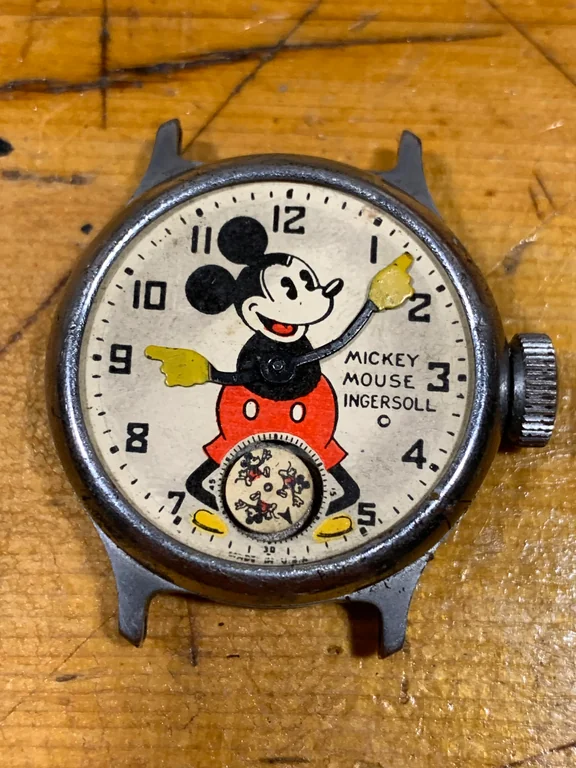
According to InkCT, the company that would later become Timex paid Disney a $1,500 (about $38,000 today, accounting for inflation) licensing fee to make the design above come to life. And it’s a good thing they did. They debuted the watches at the 1933 Chicago World’s Fair and the timepieces became an instant success; per Connecticut History, “on the first day of sales at Macy’s the store sold 11,000 of these highly sought-after watches.” Parents, looking to spark joy for their children, could also justify the purchase as practical.
The success of the Mickey Mouse watch stabilized the company and gave it breathing room to reinvent itself. The company would eventually rebrand as Timex, a name that would become synonymous with durability and affordability. Decades later, the company even opened a museum called Timexpo in Connecticut to celebrate its history — including, of course, the mouse who helped save it. The museum has since closed, but the story lingers: in the middle of the worst economic downturn in modern history, one of America’s most enduring watch brands was rescued not by a banker or an industrialist, but by a cartoon character with big ears and even bigger gloves.
Bonus fact: The brand name “Timex” isn’t a reference to timekeeping devices. In 1941, a Norwegian businessman named Thomas Fredrik Olsen bought the Waterbury Clock Company and ultimately renamed it Timex. His son later told Fortune that the name was a portmanteau — “My father always loved to noodle with words. He liked to read Time magazine, and he used a lot of Kleenex, so he put the two names together and got Timex.”
From the Archives: The Watch Allegedly Preferred By Terrorists: Even bad guys need to tell time.