
The Pokémon That Got Banned for Something It Didn’t Do
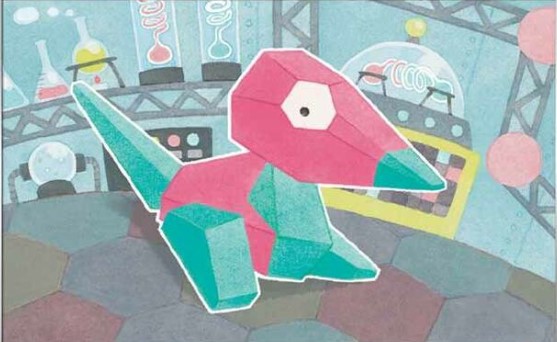
The Pokémon franchise is a worldwide phenomenon. Television shows, video games, card games, stickers and t-shirts and other licensed goods — Pokémon are seemingly everywhere. The Pokémon above is called Porygon, and you don’t need to know much, if anything, about it, to understand why it’s probably the victim of a smear campaign.
On December 16, 1997, at 6:30 PM local time, millions of Japanese children sat down to watch TV — the 38th episode of the first season of the Pokémon anime series made its debut at that time. The episode, titled “Dennō Senshi Porygon” — or “Electric Soldier Porygon” in English — was, by all accounts, a fairly standard adventure for a Pokémon episode. But about twenty minutes into the show, it had become a public health crisis.
During the episode’s climax, the heroes found themselves under attack from an antivirus program that had mistaken them for computer viruses. As missiles closed in on the group, Pikachu — the yellow electric mouse Pokémon that has become the franchise’s de facto mascot — unleashed his signature Thunderbolt attack to destroy the computer program. Pikachu won the battle — but kids across Japan lost. The resulting explosion filled television screens across Japan with rapidly flickering red and blue lights — strobing at a rate that would prove catastrophic. Within hours, as Polygon reported, nearly 700 children had been rushed to hospitals, some suffering from epileptic seizures. Many more experienced vomiting, temporary blindness, and disorientation, with roughly 12,000 kids complaining of some sort of adverse effect from Pikachu’s explosion. It remains, according to the Guinness Book of World Records, the most photosensitive epileptic seizures ever caused by a television show, per Comicbook.com.
The fallout was swift and severe. Japanese news networks began reporting on the hospitalizations just three hours after the broadcast. (Some replayed the offending scene, causing more kids distress.) TV Tokyo issued a public apology within 24 hours. Nintendo’s stock tumbled. The Pokémon anime went on a four-month hiatus while medical experts and the show’s creative team scrambled to understand what had gone wrong and how to prevent it from ever happening again. The episode was immediately pulled from circulation and has never aired again — in Japan or anywhere else. It remains the only Pokémon episode to be banned internationally, never receiving an official dub in any language.
And if you read the above, you’re probably asking: What does that have to do with the Porygon Pokémon pictured above?
Nothing, probably — but if you’re a Porygon fan, that may not matter.
The episode centers on Porygon, as the title suggests. But if you watch the episode — and you probably shouldn’t, but bootleg copies exist online — the seizure-inducing sequence was caused by Pikachu’s Thunderbolt attack, as described above. As Pikachu already adorned lunchboxes and backpacks and video game cartridges around the world, it wasn’t going away. The Pokémon powers-that-be wanted to ensure that everyone knew they took the health crisis seriously, though. Something needed to change, and — while there’s no documentary evidence that this was done intentionally — Porygon took the fall. As Screen Rant noted, Porygon became “the scapegoat, never to appear in another anime episode.” And except for some background appearances today, Porygon’s unofficial exclusion still holds. For nearly 30 years, the boxy, red and blue character has been essentially erased from the anime because of something Pikachu did.
In September 2020, the official Pokémon Twitter account briefly acknowledged the injustice, posting “Porygon did nothing wrong.” The post was quickly deleted for reasons never explained. Meanwhile, Pikachu continues to electrify audiences worldwide, his Thunderbolt attacks on TV now carefully dimmed and slowed, no questions asked about his role in television’s most notorious medical emergency. But Porygon sits on the sidelines, taking the blame.
Bonus fact: In 1987, ABC debuted a sitcom called Sledge Hammer!, featuring a shoot-first and ask-questions-later cop named “Sledge Hammer.” The show received critical acclaim but wasn’t doing well in the ratings, so midway through the first season, ABC decided to not renew the show for a second season. As the show was still in production as it aired, the season (and now, series) finale had not been filmed when the news hit. So showrunners decided to have Sledge Hammer! end with a bang — literally. The titular character, in that final episode, had to disarm an atomic bomb — but failed, causing the San Francisco of the Sledge Hammer! universe (including Sledge himself) to be instantly vaporized.
The finale proved so popular, though, that ABC reversed course on the cancellation, ordering a second season. Per Cracked, unable to come up with a plausible way to explain how the cast (and city) survived a nuke, the showrunners decided to make the next season a prequel. That proved unpopular, and the show was cancelled again.
From the Archives: Hitler, One Night Only: Another one-and-done TV show, for very good reason.