All Price Tags Go To Heaven
Walk into virtually any store in the United States or the rest of the Western world and you’ll find it pretty easy to shop — you walk through the aisles, looking at what’s available; check the price of the item being offered; and if you want it and the price is right, you bring it to the register to check out and pay. It’s easy, quick, and no need to haggle.
And that last part is by design. Because in the 1870s, a pair of retailers decided that the alternative was sacrilegious.
For ages, commerce was done primarily through conversation. Before people minted coins, commerce was centered around bartering or using precious metals to transfer wealth. Coinage allowed this to be streamlined, but haggling was still the norm. As Robert Phillips, a professor who studies pricing systems and history, explained to NPR, “for almost all of the history of human commerce — for thousands of years — you walk into a store, and you point to something. And you say, how much does that cost? The guy at the store is going to say, how much you got? You know, everything was a negotiation.”
But today, that’s rarely the case. You walk into a store and you’ll see the same items, give or take, but you’ll almost always see something else — a price tag. They’re ubiquitous, as demonstrated by the (kind of silly) example below (via reddit).
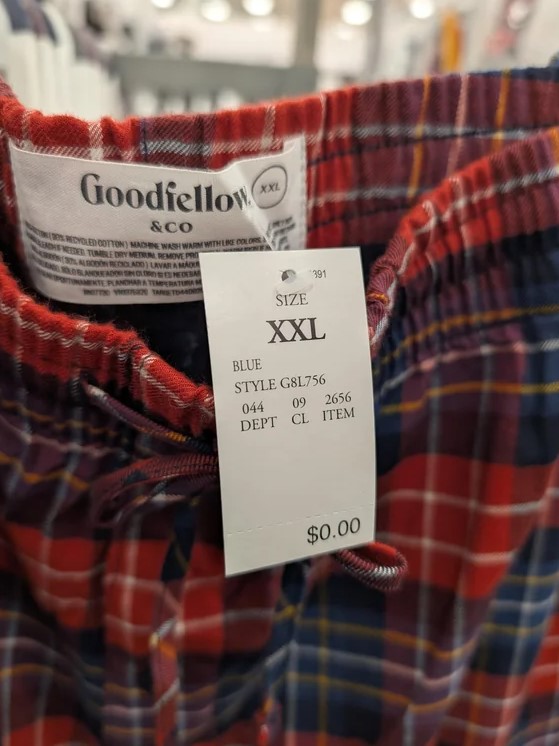
Today, most of us probably appreciate the speed and clarity such tags provide (except in the case above, I guess, which is just confusing). But that wasn’t the original reason for this innovation. Religious-driven moral concerns were, as explained in the book Creative Conflict: A Practical Guide for Business Negotiators (via Wikipedia):
The Pennsylvania Quakers” “honest price” was institutionalized in 1874 by John Wanamaker, when he opened his eponymous department store in Philadelphia. A renowned innovator of the highest integrity, Wanamaker was the first retailer to offer money-back guarantees. He also invented the price tag: “A devout Christian, he believed that if everyone was equal before God, then everyone should be equal before price.” Before Wanamaker’s, every purchase was open to a haggle.
At roughly the same time, Macy’s — which was not so coincidentally owned by another Quaker, Rowland Hussey Macy — instituted the same “price tag” innovation. As NPR explained, part of the reason was the same: “Having one price for each item, that was the Quakers’ radical thing. They thought haggling was just fundamentally unfair. They thought charging different people different prices for the same thing was morally wrong.”
Customers loved the experience, especially at a time when you didn’t have many options to choose from. Being able to get a fair price without upsetting the shopkeeper or feeling like he gouged you was a relief, and, again, it was just a faster experience. But not everyone is convinced that the price tag is here to stay. With the explosion of online shopping and marketplaces like eBay, some academics believe that within 50 years, price tags will be a relic of history — absent divine intervention, maybe?
Bonus fact: You’re probably familiar with the Quaker Oats Company, who makes oats, a lot of breakfast cereals, granola bars, and Rice-a-Roni, among other things. Their logo (seen here) features a man dressed as a traditional Quaker and notes that the company was established in 1877, at a time when Quakers were innovating in the business world (as noted above). But there’s nothing actually Quaker about the company. The owners at the time, Henry Seymour and William Heston, weren’t members of that religious group. Rather, per the company’s official website, they “claimed to have selected the Quaker name as a symbol of good quality and honest value.”
From the Archives: The Famous Symbol with the Hidden N and D: The Quakers had something to do with this one, too.