
How Hippos Swim
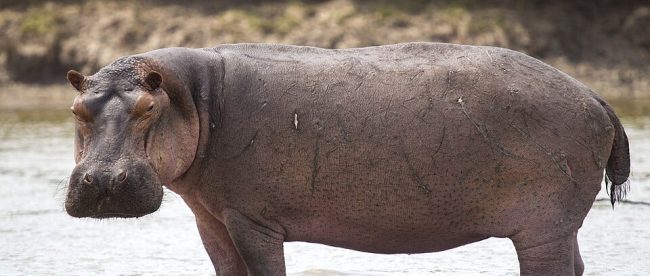
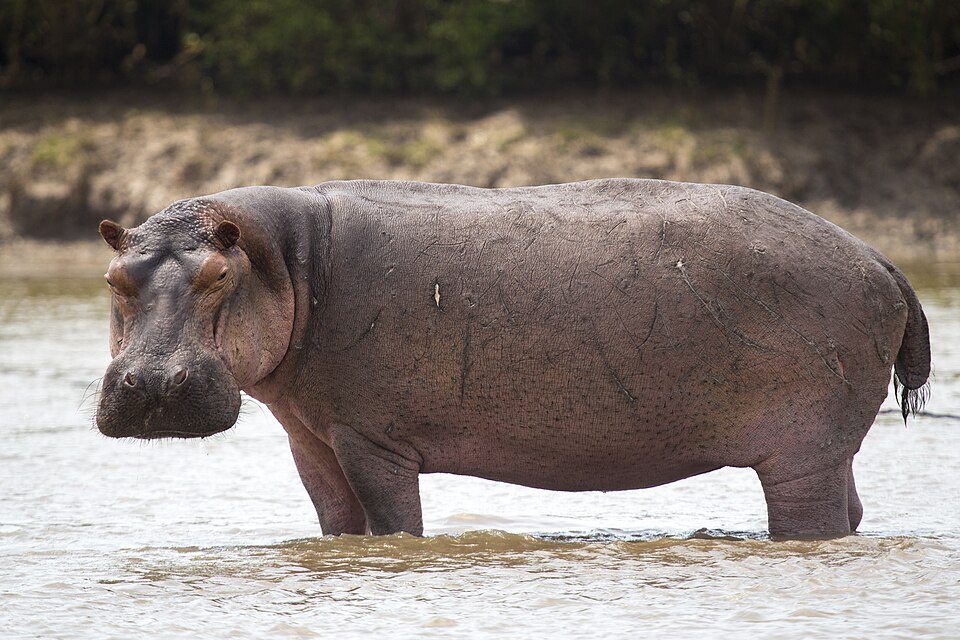
Pictured above is a hippopotamus, standing in water like hippos often do. They’re mammals, not fish, of course, but are still considered semi-aquatic animals because they regularly live both in the water and on land. For hippos, getting wet isn’t much of a choice — as the San Diego Zoo explains, “hippos have unique skin that needs to be kept wet for a good part of the day. Staying out of the water for too long can lead to dehydration, so hippos try to remain in water during the day.” And if you’re spending that much time in the water, you’d need to get around.
But water isn’t like land — you can’t just walk from A to B. You need to be able to swim — right?
Wrong, despite the video below. Hippos don’t swim.
That clip comes from a 2021 episode of Inside Edition (click here if it doesn’t load). It shows a very angry hippopotamus attacking a speedboat that just wanted to come by the creature for a quick look. The speedboat is going pretty fast, but the hippo seems to keep up for a while, doing what looks like the hippopotamus equivalent of the butterfly swm stroke.
But that’s not what’s actually happening. The hippo isn’t swimming, because hippos can’t swim — at all. They can’t even float. Their bodies are very muscular and their bone density is high; collectively, this makes them too dense to float, let alone swim. Rather, as the San Diego Zoo explains, “they move around by pushing off from the bottom of the river or simply walking along the riverbed in a slow-motion gallop, lightly touching the bottom with their toes, which are slightly webbed, like aquatic ballet dancers.”
And, as seen in the the video above, they can propel themselves out of the water like bullet with teeth. But either way, as marine biology professor Douglas McCauley told The Atlantic, “It almost always maintains some contact with the bottom and walks or bounces off the bottom using these bottom contact points as a source of propulsion.” Sometimes, they push off the bottom to come up for air, but sometimes, they do so to attack anything they find threatening.
You can see a clip of a few of them walking on the river’s bed, here, via BBC Earth — and that’s probably as close as you should get to a water-walking (or ground-pounding) hippopotamus regardless — they have a well-deserved reputation for being dangerous. As BBC Wildlife notes, “they are very aggressive and territorial, and have a habit of charging at boats and capsizing them,” and are responsible for approximately 500 human deaths a year — 20 times more than lions are.
Bonus fact: Another proof point about the aggressiveness of hippos, and apologies in advance because this is morbid: In 2005 or 2006, a farmer named Marius Els came across a baby hippo that had been stranded by a flood. Els adopted the hippo as a pet, named it Humphrey, and, per Sky News, “bond with [the hippo] that enabled the former army major to ride on his back, feed him and even brush his teeth.” But the bond wasn’t strong enough, because in 2011, Humprhey mauled Els to death and immersed him underwater afterward.
From the Archives: Why Americans Were Almost Hungry Hungry for Hippos: Meat’s meat, right?