
The Baseball Steroid Testing Loophole of 2003
In 1994, Major League Baseball went to war. On one side was the league and the team owners; the other, the players and their union. At issue was, ultimately, how to divvy up the spoils of their collective venture. The two sides regularly entered into Collective Bargaining Agreements (CBAs), but the CBA that outlined the relationship at the time ended in 1993. Unable to reach a new agreement, the players went on strike and ultimately, the 1994 World Series was cancelled. When the sport returned the next year, both sides feared fans would be slow to return as well.
But over the next few years, something strange happened — players started hitting home runs at levels never seen before. And by 1998, the result was almost comical. The single-season home run record, which had stood for more than three decades, was not only broken, but topped by two players (with a third also threatening to beat it). Fans were enthralled and home run fever took over Nike ads and even made a cameo in The Simpsons.
But there was a controversy brewing beneath. Some players were using performance enhancing drugs, and it was an open secret — anabolic steroids appeared on the league’s banned substances list as of 1991, there was no testing to enforce it. Owners and players alike were slow to address this bubbling concern, in part because both sides wanted to have it both ways. Owners knew the draw of high-powered offense — that paid the bills. And they continued to fork over millions of dollars in salaries to guys who were suspected of using PEDs. Many players — particularly the large majority who were not juicing — wanted testing, but the feeling was far from universal and the distrust of ownership from the strike of 1994 hadn’t subsided. The players and their union, citing privacy concerns, were reluctant to establish a testing mechanism.
Ultimately, the two sides came to an agreement, and in 2003, the league and union implemented its first testing program. It was more of a survey than an investigation, though. The two parties agreed that every player would be subject to a random test during the 2003 season, with no penalties incurred if they tested positive, and with the results remaining anonymous. If more than 5% tested positive, the league would institute a mandatory testing scheme — with penalties — for the 2004 season and beyond. If fewer than that tested positive, the anonymous survey would continue for the next year, with an eye toward ending it if numbers fell below 2.5%.
By the point, a large percentage of players — the clean ones, to be clear — hoped that the league would pass that 5% threshold. Few of those, if any, were willing to taint the pool by taking PEDs, but some came up with an easier idea: not take the test at all. The testing agreement allowed players to decline to be tested, but if they did, their declination would count as a positive test in calculating whether the league passed that 5% threshold.
In March 2003, at the beginning of the season and therefore the testing period, sixteen members of the Chicago White Sox decided to do just that, as the New York Times reported. As the 5% threshold meant that only 70 positive tests were needed to implement the tougher testing program, and only half of that was needed to keep the survey version continuing, those 16 “positives” would have been significant. They found a loophole and were ready to exploit it — and it looked like it was going to work.
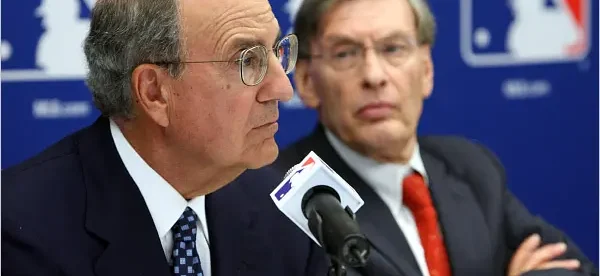
But those in favor of testing — players and owners like — weren’t a fan of the White Sox players’ gambit. Per ESPN, “Commissioner Bud Selig was angered when he heard some of the White Sox had considered not taking the test, according to a high-ranking baseball official.” And the players union reacted similarly, intervening quickly to get the sixteen players to submit to testing.
The White Sox holdouts eventually capitulated, but it didn’t matter. Of the roughly 1,400 players tested that year, between 5% and 7% tested positive for a banned substance. The league implemented testing and has kept a version of it in place since.
Bonus fact: In 1962, the San Diego Chargers of the then-American Football League were terrible, winning only four games while losing 10. The next year, they rebounded, going 11-3 and winning the league championship by a score of 51-10. And there’s a good chance steroid use had something to do with it.
As ESPN reported, their coach, Sid Gillman, used the preseason training camp in a way novel at the time but common today — instead of focusing on drills and plays, the coaches got the players in the weight room and had them build muscle mass. To help in that effort, Gillman provided the players with Dianabol, an anabolic steroid which was legal at the time and whose downsides were still unknown. Many players took Dianabol pills three times a day during the training camp. The drug program became optional when the season started and was ultimately discontinued a few seasons later.
From the Archives: Monkey Business: Is there a MLB Hall of Famer who used performance enhancing drugs? Almost certainly, but it’s probably not the guy you’re thinking of.