
The Boy and the Blue Cup
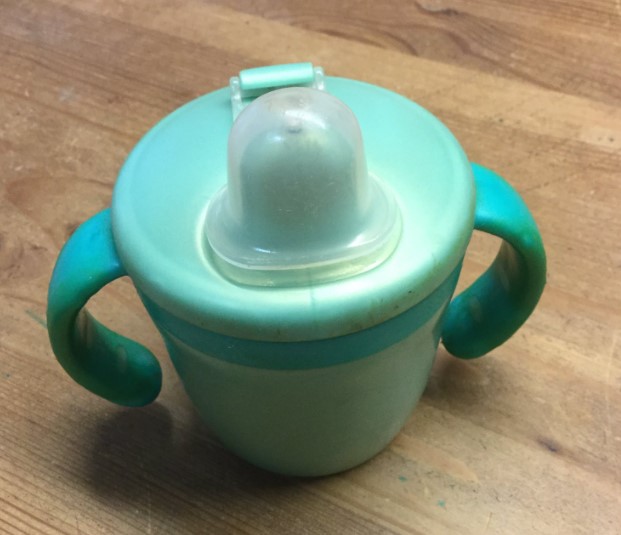
If you have a toddler at home, you know that meal time is always a trick. They want to feed themselves but their motor skills aren’t so great — their meals are almost as likely to end up on their laps as they are in their mouths. The good news is that there are all sorts of stuff out there to help parents navigate this messy challenge. Bibs, high chairs, tiny utensils made for little fingers, and of course, the sippy cup. Seen above, this drinkware features two handles specifically designed for tiny hands, a lid to prevent big spills, and a spout with a valve so that water, milk, or juice doesn’t come streaming out.
Over the years, sippy cup technology has gotten better and better — which is great for most parents and kids. But not for Marc Carter and his son, Ben.
The cup above is a Tommee Tippee-brand sippy cup, and if you go to their website, you’ll find a lot of similar-ish ones, but no exact match. And in 2004 or so, Ben Carter, then age 2, started using the cup pictured above. Fast forward to 2016, and he was still using the cup. Ben, then age 14, was on the severe end of the autism spectrum — non-verbal, generally non-communicative, and not all that flexible when it came to change. He posted to Twitter that Ben would only drink from this specific blue cup — he doesn’t drink from anything else, to the point of requiring two emergency trips to the hospital due to severe dehydration.
Unfortunately, Tommee Tippee retired this specific line of cups. The ones the Carters owned were not designed to last a decade and none of the ones they had left were usable. Giving Ben a newer version didn’t work — per Marc, “the replacements are all new and fancy, we’ve tried them, Ben throws them at us.” He estimated that their last remaining cup only had a few weeks of life left in it — and Ben simply wouldn’t drink from any other receptacle. So he took to social media, asking people to send in their old Tommy Tippees.
The world responded. People from around the globe searched their baby stuff for the old cups, with many offering to mail the Carters what they found. Hundreds if not thousands of others helped spread Marc’s message. And ultimately, the Tommee Tippee company noticed.
As the BBC reported, the company searched for the mold for the original cup, located it — and got to work. Per a company spokesperson, Tommee Tippee was “able to start production on a run of the original cup,” producing 500 or so, enough to “ensure that Ben has a lifetime supply.” Because of the kindness of many, Ben Carter and his family will never have to worry about access to appropriate drinkware again.
Bonus fact: When people travel, they often bring back a keepsake from their trip — and usually, the item is specific to the location they visited. For people visiting the U.S., cups may be on that list of collectibles — but not decorative shot glasses or anything like that. Red Solo-brand cups — the ones often used at family barbecues or at fraternity parties for beer pong — have become a bit of an international sensation. The cups are ubiquitous in American media but virtually unheard of in real life outside of North America, making them an accidental piece of Americana. As a result, as Souvenir Finder notes, “non-Americans (especially younger Europeans) seek out red Solo cups as an iconic American souvenir.”
From the Archives: Saving Sonic: Why McDonald’s changed its McFlurry cups.