
The Censored Tequila
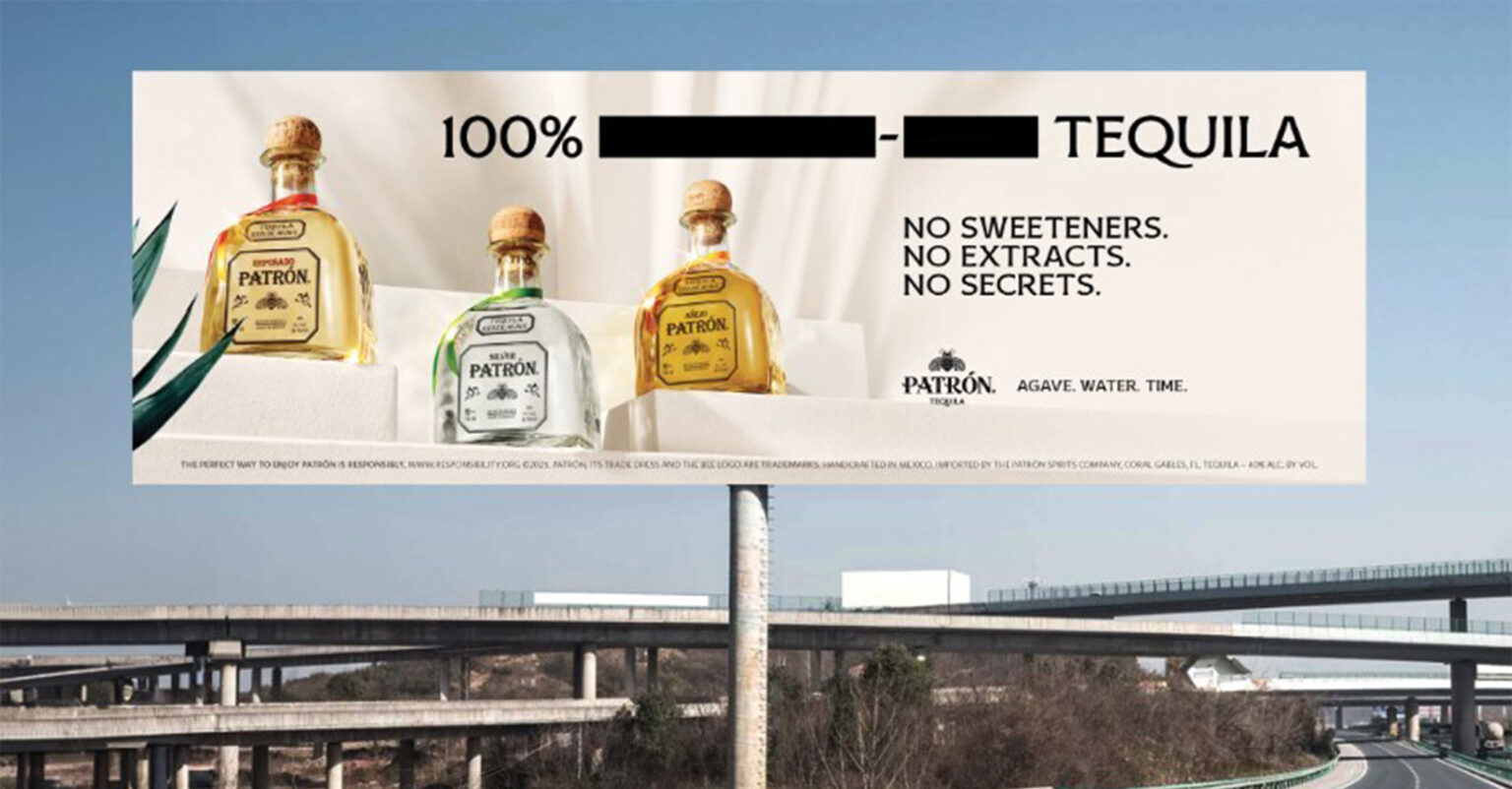
If you’re a fan of margaritas, you’ve had your fair share of tequila. It’s the key ingredient to the popular cocktail, after all. There are a lot of brands of tequila out there — Jose Cuervo, Casamigos, and Patrón often lead the list — and, as you can imagine, competition among those brands can be intense. Each of those bands and their parent corporations invest millions of dollars each year in advertising — and spent a similar effort in the market research to ensure that their messaging makes sense.
So, why would one of those brands run a billboard that, literally, blocks out much of the messaging, as seen above?
The ad above is for Patrón, a brand owned by Bacardi. Patrón is one of the best-selling premium tequilas in the world, and it’s been around since 1989. The company is proud of its product — made, they say, with just three ingredients: 100% Weber Blue Agave, water, and yeast. No sweeteners. No extracts. No caramel coloring to make it look older than it is. It’s simple, traditional, and transparent — and their market research team told them that consumers appreciated that approach to liqueur-marking. So in February 2025, Patrón released a new ad campaign (seen below), under the slogan “100% Additive Free Tequila.”
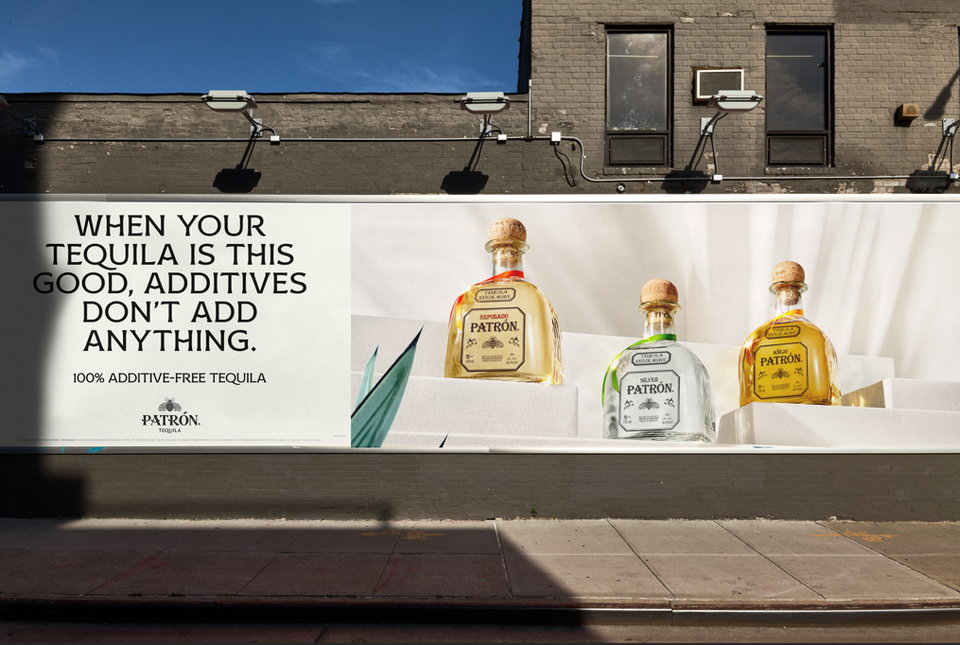
And for that, the Mexican government suspended Bacardi’s ability to export Patrón for four days.
There wasn’t anything incorrect or dishonest about the ad — Patrón, to be clear, is 100% additive-free. And by any normal definition of “100%” or “additive-free,” that’s unusual. Many other brands add (as in, “additive”) to their tequila glycerin for smoothness, oak extract for flavor, caramel for color, or a sugar-based syrup for sweetness. And in Mexico, that’s not only allowed, but it’s a bit of an open secret. Tequila production is regulated by the Consejo Regulador del Tequila, or CRT, which sets the rules for what can and can’t be called tequila. Under those rules, producers are allowed to add up to 1% of those additives without disclosing them on their label.
But if you think that means those drinks aren’t “additive-free,” well, think again. As Forbes explained, according to the CRT, because small amounts of additives are legally permitted, there’s technically “no such thing” as additive-free tequila — at least not in a way that can be officially certified. The CRT also argued that such claims would confuse customers, and told Bacardi that if they didn’t pull the “100% Additive Free Tequila” messaging from their Patrón ads, the CRT would prevent Patrón exports. Bacardi, understandably, backed down — kind of.
In July 2025, the Patrón ads came back with a new spin on the campaign, which Bacardi called “Censored Truth.” According to The Daily Pour, the ads are deliberately redacted: billboards reading “100% [REDACTED] Tequila” (as seen at the top) with oversized black bars covering the missing words, and radio spots punctuated by bleeps where “additive-free” would go. One ad read, “We can’t tell you that we are a 100% … Tequila. So we won’t.” As Patrón’s global senior vice president Roberto Ramirez-Laverde put it in a statement, “‘Censored Truth’ is our way of doubling down on that promise — even if you need to read between the lines or we have to bleep out a few words because of efforts to restrict what we can share.”
And because they weren’t actually saying the banned phrase, CRT couldn’t do anything about it. Curious consumers figured out what the ad was trying to say, and Patrón got the point across — even without saying so.
Bonus fact: If you ever watch a Major League Baseball game (or a minor league one, for that matter), you’ll probably notice that there are ads all over the place — except right in the center of the outfield. (Here’s a picture of the Mets’ stadium, for example.) That area is universally left unadorned and typically is black or a solid, dark color. That’s intentional. The area is called the “batter’s eye” — it’s there to ensure that the batter can see the ball coming out of the pitcher’s hand without any interference from a busy background.
From the Archives: To Boldly Go Where No Advertisement Has Gone Before: Space billboards? Thankfully, no.