
The Great Pink Coincidence of 2026?
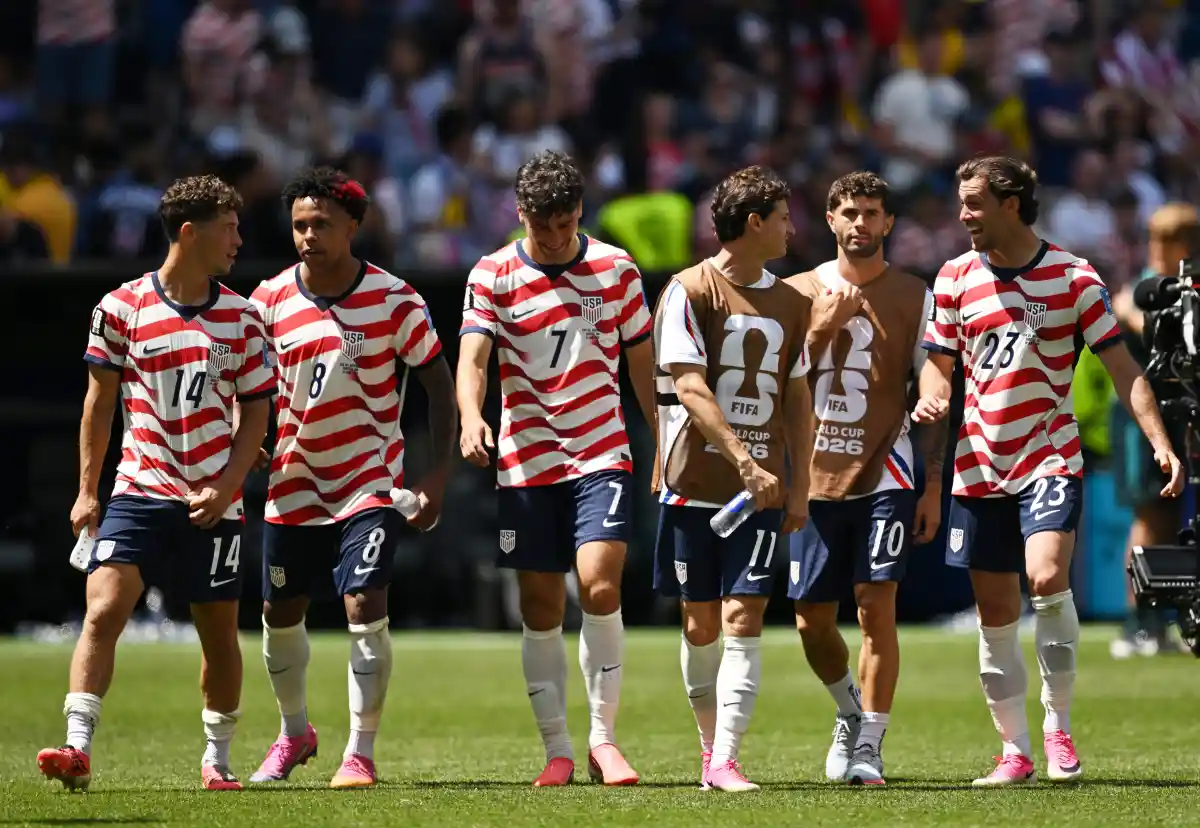
Every four years, the World Cup dominates headlines as nations from around the globe gather in a soccer (football) tournament that captures our collective attention. And those headlines and attentions are worth a lot of money — companies of all types pay top dollar to sponsor teams, get their logos on the venues, and earn endorsements from the players. The goal, of course is to use the popularity of the tournament to get tens of millions of eyeballs on your brand or product — and that requires you to stand out.
Which is exactly what isn’t happening when it comes to the shoes.
Soccer players wear soccer cleats, as seen in the Team USA image above. Cleats, unlike most other parts of an athlete’s uniform, aren’t actually uniform — in most cases, players get to choose what brand, style, and look they prefer. Professional athletes partner with major brands, acting as endorsers even when on the pitch. Part of the goal, for the shoe brands at least, is to stand out. But in this year’s World Cup, that’s not quite happening. As seen above, a lot of Team USA’s players all happen to be wearing pink cleats.
And Team USA isn’t alone in this regard. Here’s a picture (via CNN) from the Portugal/Congo match, and you’ll see three players across two teams, wearing, collectively, six pink shoes. Look at the cleats of players from the other countries, too, and you’ll find that the vast majority of them are — you guessed it — pink.
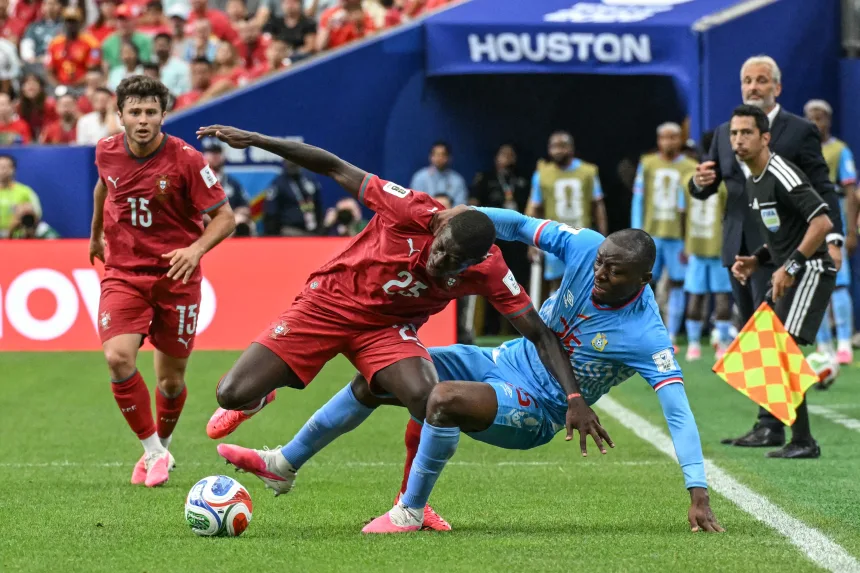
Is there some secret message here? A global campaign around pink sneaks? Did someone accidentally leave a red t-shirt in the washing machine when all the cleats were cleaned?
Not quite. Most likely, this is all some big coincidence.
First off, pink shoes show up beautifully against the green of the soccer fields. As Odinga Nimako, a leader in Nike’s global football (soccer) footwear team told The Athletic, “Pink really helps bring it out against the green grass on the pitch, whether you’re in the stands or whether you’re watching on TV, making sure that visibility is there. That is definitely something that we looked at. For this (World Cup) moment we really wanted to focus on that visual impact.” And, per Nimako, Nike also wanted to make sure that whatever shoe color they came up with complemented the various uniforms of the varied teams on the field — per that same Athletic article, “no teams at this World Cup have primarily pink kits” and “that was also a consideration.”
But of course, not every athlete is wearing Nikes. So what about the other brands? They probably followed a similar path.
Fashion color choices are — as any fan of The Devil Wears Prada knows — often made by a small group of people months, if not years, before products hit the shelves. Sneaker makers spend a lot of time pore over research, figuring out what consumers are likely going to lean toward in the season to come. In 2024, GQ notes, fashion trend forecasting agency WGSN predicted that “electric fuchsia” — a bright pink — would be “one of the biggest colors of spring/summer 2026.” Nike and its top competitors — Adidas, New Balance, Puma, Sketchers, and more (but not Allbirds) were privy to the same research. GQ continues:
Legendary sneaker designer Christian Tresser, the man behind icons like the Nike Air Max 97 and Nike Air Zoom Spiridon, isn’t at all shocked by the pink invasion. “This is what happens when marketing and trend analysis is seeing and using the same sources,” he said. In other words, Nike, Adidas, Puma, and New Balance may have all arrived at the same conclusion because they were all reading the same forecasts.
But in the end, the effort turned into an accidental cross-brand collaboration. With all the pink shoes blending in with one another, no one company is getting the pop they were after. This may be the summer of electric fuchsia, but no one sneaker brand gets to own it.
Bonus fact: Many of the stadiums used in this year’s World Cup have corporate sponsors, but those sponsorship deals don’t include money going to FIFA, the organizers of the tournament. FIFA, per the Athletic, required that “everything from concession stands to airspace be cleared of the [pre-existing] sponsors,” and those sponsors complied. But one sponsor did so in such a creative way, it probably enhanced their sponsorship. Levi’s Stadium in Santa Clara is home to the San Francisco 49ers, and was expected to cover their logo on the side of the venue. They did — but, as seen here, they did so while preserving the logo’s iconic Batman-like shape. And to drive the point home, as seen here, they echoed the coverup on their social media channels.
From the Archives: Why Pelé Tied His Shoes Before a 1970 World Cup Match: It was for the cameras.