
Don’t Let the Moose Lick Your Car
When driving, it’s important to pay attention to the signs, and particularly the warning signs. The sign may read “roadwork ahead,” “icy conditions,” “expect delays” or the like — none of those are out of the ordinary. But in 2020, visitors to parks in parts of Canada were greeted with an unusual message, as seen below (via Carolyn Campbell on Twitter):
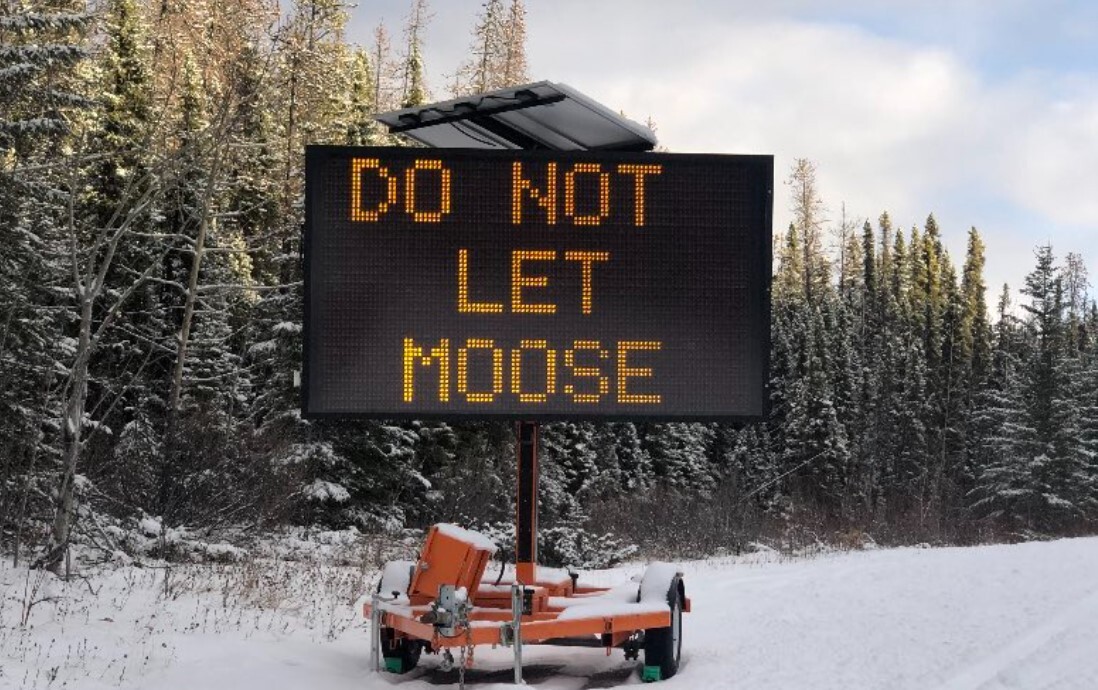
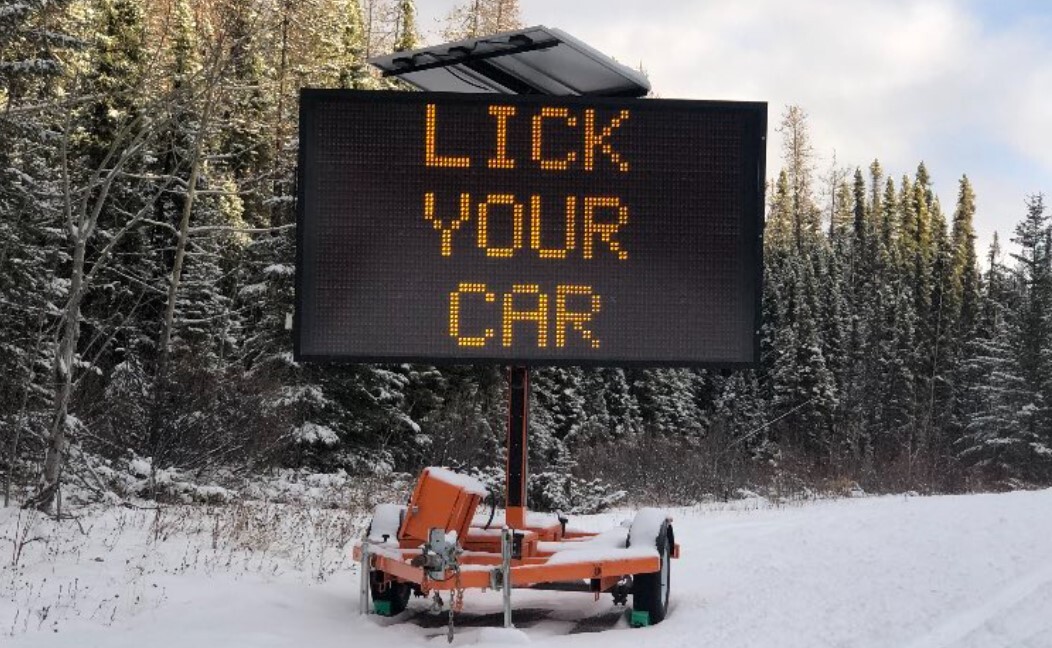
In case you can’t see it, the sign says “Do not let moose lick your car.” Not an everyday problem, to say the least. What’s going on here?
Moose are massive creatures — adults can weigh 1,500 pounds or more — and are a serious road hazard, especially after dark. Hit one with your car and you’re in trouble; the moose might walk away, but your vehicle probably won’t. (In New Hampshire recently, a Chevy Silverado struck a moose and was totaled; the moose, police said, “got up and walked off without losing a drop of blood.”) Officials, therefore, go to great lengths to keep moose off the roads.
And that’s the core reason why these signs started to appear. Moose, it turns out, are drawn to cars in the winter — not because they’re curious about your bumper stickers, but because they want to eat the salt. Moose need a lot of sodium, and in winter, cars fill that need. Roads in cold climates are treated with salt to melt ice, and that salt ends up coating everything that drives on them. For a moose, a grimy, salt-crusted SUV is basically a mobile mineral lick. As Roy Rea, an assistant professor at the University of Northern British Columbia who has studied moose for 25 years, explained to the CBC, “In the summer there’s lots of greenery around and those plants have a lot more minerals in it… and in the winter they typically don’t have access to that.” Cars, on the other hand, give the moose the salt they need.
The problem isn’t just that it’s weird to have a half-ton animal slobbering on your fender. The problem is that the moose become fans of licking cars — and keep seeking out more cars to lick. Steve Young, a spokesperson for Jasper National Park in Alberta, explained the issue to the New York Times:
“If you find a restaurant you really like, do you go back to that restaurant again?” he said. “Yes, you do. That’s what wildlife do. They’ll go back; they’ll get habituated to it. They’re more likely to lick indiscriminately. If the opportunity isn’t there, they don’t learn that’s a way they can replenish their diet. So we’re trying to take that opportunity away.”
And when moose learn to target cars, that’s a big problem. As NPR reported, “the interaction can cause the moose to lose their fear of cars and people — leading to traffic accidents.” That makes them more likely to wander into the road, and more likely to get hit. Parks Canada, the agency behind the signs above, started issuing its annual warning after drivers began calling in to report moose walking right up to their cars and licking them.
Tracy McKay, a Parks Canada official, acknowledged that the whole thing sounds ridiculous. “It does sound very funny,” she told the CBC. “It’s OK to laugh at it, as long as people drive responsibly and do what’s best for the wildlife.” The agency’s advice is simple: if you see a moose on the road, slow down, snap a photo if you want, but keep moving. Don’t stop to let the moose snack.
And yes, Parks Canada has tried alternatives to road salt, but nothing works as well or costs as little. Even sand, which the agency uses on some roads, contains trace amounts of salt — enough to draw moose in anyway. So for now, the best solution is public awareness: remind people that a moose licking your car isn’t an impromptu zoo visit — it’s a safety hazard, for the moose and for you.
Bonus fact: In 2019, Canada and Norway went into battle over moose — or, more accurately, statues of moose. For years, the Canadian city of Moose Jaw was home to the world’s largest statue of a moose, a 32-foot steel and concrete structure (seen here). But that year, Norway unveiled Storelgen (seen here), a slightly larger, silver statue of a moose. Canadians weren’t pleased. As the New York Times reported, local officials and comedians rallied residents to reclaim the title by adding to Mac’s antlers. Norwegian leaders battled back, vowing they would never surrender the crown. The absurdly earnest rivalry eventually escalated into crowdfunding campaigns, mayoral video messages, and what participants jokingly called a “moose truce.” In the end, though, Canada won — per the CBC, Mac got a new set of antlers in late 2019, bringing its height to 34 feet — and Storelgen hasn’t received a similar upgrade.
From the Archives: Why Thomas Jefferson Was Obsessed With Moose: Because they’re big, basically.