
The Most Valuable Background Actor in History?
If you’ve ever photobombed a friend’s picture, you probably didn’t think much of it. Maybe you made a funny face, maybe you just happened to be walking by — either way, it’s a harmless bit of visual noise.
But that’s because you’re not Michael Jordan. Because in the right circumstances, that could have led to a lawsuit.
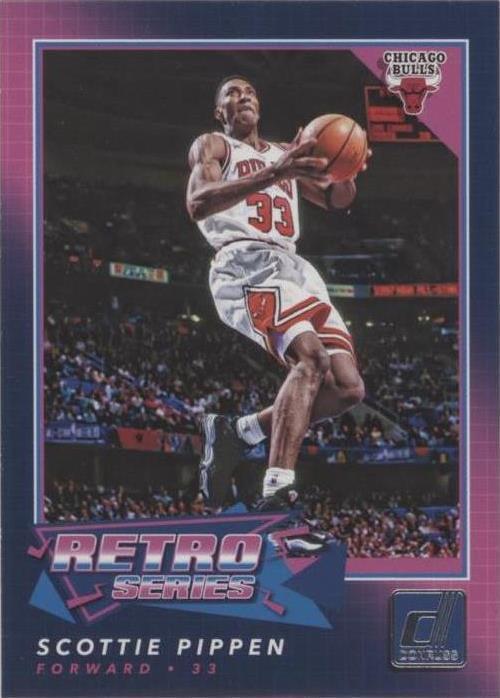
In 2017, trading card company Panini America released a card featuring Scottie Pippen, Jordan’s longtime Chicago Bulls teammate. The card, seen above, showed Pippen in action — and the only other people visible are fans in the crowd. No problems there. But a few months later, Panini released a higher-end version of the same set — and this time, Michael Jordan was visible in the bottom right corner of the Pippen card. You can see that version below.
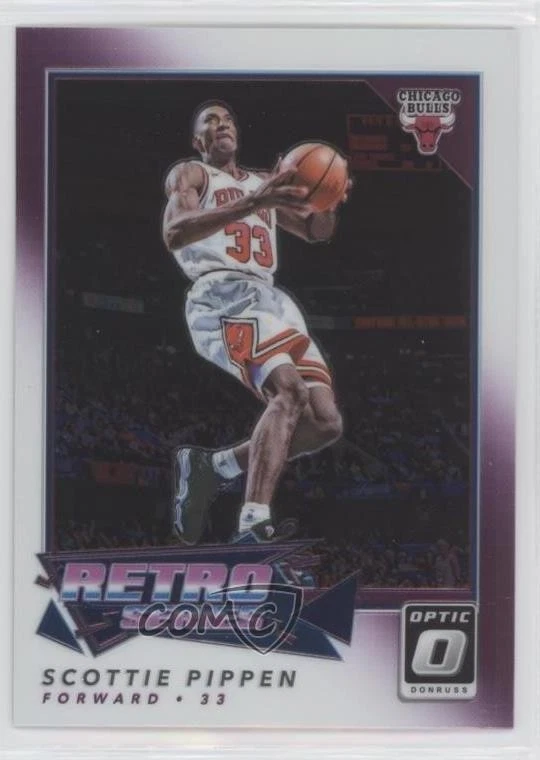
See Jordan there in the bottom right, just above the word “Optic”? He’s not so easy to see — and as a result, you’d probably think his inclusion is no big deal. But to rival card maker Upper Deck, this was a huge problem. Jordan’s presence was a violation in their eyes, and one that would not stand.
Upper Deck has held an exclusive license with Jordan since he retired in 2003. That license gives Upper Deck — and only Upper Deck — the right to use Jordan’s image, name, likeness, and trademarks on trading cards. (And they likely paid a small fortune for those rights.) As Forbes reported, Panini’s NBA license covers current active players, but Jordan hasn’t played since 2003. He’s off-limits. In January 2020, Upper Deck sued Panini, alleging that the company had “deliberately altered and manipulated Jordan’s image into the background” of its cards to boost sales and confuse consumers.
The lawsuit made some bold claims. Upper Deck argued that “background imagery of a trading card can have substantial bearing on the value of the card,” and that featuring Jordan — even partially visible, even unidentified by name — was a calculated move to capitalize on his brand. As one legal analysis noted, a single rare Jordan card had sold on eBay for $350,100. His mere presence, even in the periphery, could move markets. Panini countered that the tiny figure in the Pippen card was unidentifiable and that consumers buy trading cards in sealed packs anyway — they don’t know what’s inside until after purchase.
The case dragged on for more than a year before the two sides reached a confidential settlement in June 2021. The terms were never disclosed, but the message was clear: you don’t put Michael Jordan in your photo, even accidentally, without consequences.
The stakes have only grown since. As The Athletic recently reported, Jordan hasn’t appeared on an official NBA-licensed trading card since 2009, and that scarcity has made his existing cards extraordinarily valuable. In August 2025, a one-of-a-kind card featuring both Jordan and Kobe Bryant sold for $12.9 million — the highest publicly known sale of any sports card in history. Upper Deck president Jason Masherah told The Athletic that “collectors want it,” but until Upper Deck can secure an NBA license, new Jordan cards in team uniforms simply won’t happen.
So if you’re a trading card designer, here’s the lesson: when cropping a photo, make sure Michael Jordan isn’t lurking in the corner. Jordan’s pic isn’t just valuable — it’s legally radioactive.
Bonus fact: One of the most valuable cards of all time also centered around a lawsuit. From 1909 to 1911, the American Tobacco Company produced the “T-206” tobacco card set — baseball cards that were sold with cigarettes and loose tobacco. Thousands of each card were printed, except for one. Future Hall of Fame shortstop Honus Wagner was a non-smoker who, per most reports, objected to his inclusion in the marketing of tobacco products, and threatened to sue if his card was included. The company printed and distributed only 50 to 60 of his cards, halting production after Wagner objected. The card is vanishingly rare, and the T-206 Wagner is now considered among the holy grails of sports cards. In August 2022, one of the remaining cards sold for $7.25 million.
From the Archives: Foul Tip: The greatest baseball card ever made. (And thank you to reader Jesse for sending one of these years ago!)